
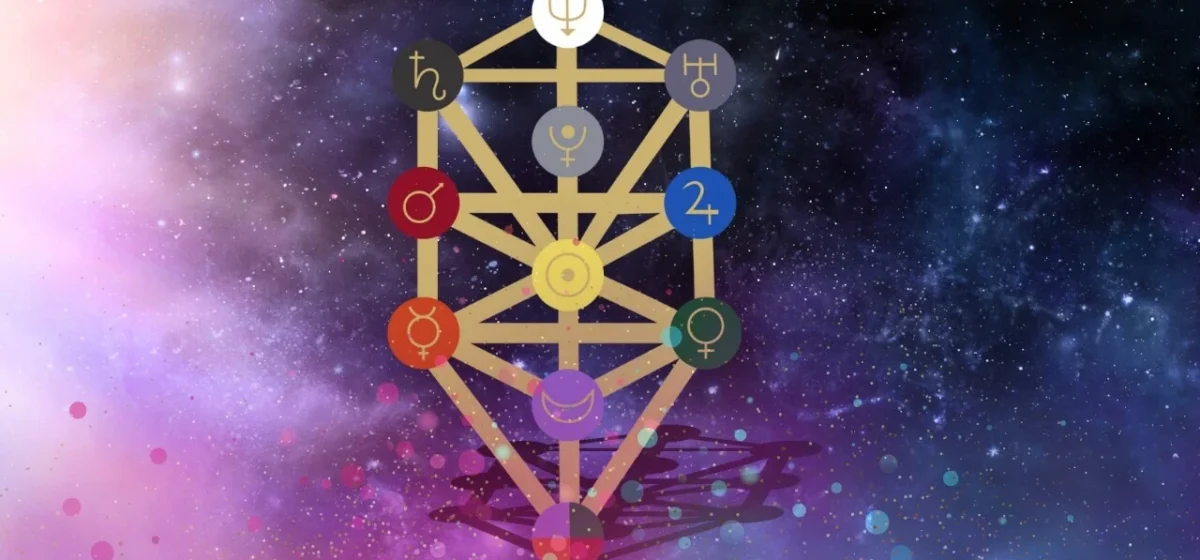
Kabbalistic Magick is one of the most profound and intellectually rich spiritual systems in human history. Rooted in Jewish mysticism, it offers not merely ritual practice but a comprehensive framework for understanding reality, consciousness, and personal transformation. Unlike popular portrayals of magick as something theatrical or external, Kabbalistic Magick focuses on inner alignment, disciplined intention, and conscious interaction with universal principles. Its purpose is not to escape reality, but to engage with it more intelligently and responsibly.
At the heart of Kabbalistic Magick lies the understanding that reality is structured and interconnected. Thoughts, emotions, actions, and external events are not random; they arise from underlying patterns that can be studied and understood. Kabbalistic teachings describe existence as a layered system in which spiritual forces flow into material reality. By learning to recognise these patterns, individuals gain insight into why certain situations repeat, why obstacles arise, and how inner states influence outer circumstances.
A central symbolic framework within Kabbalistic Magick is the Tree of Life, a diagram representing stages of consciousness and levels of existence. Rather than being abstract philosophy, this structure serves as a practical map of the human inner world. Each aspect reflects different qualities such as discipline, compassion, intellect, or grounded action. Imbalance in life is often mirrored by imbalance within these qualities, and Kabbalistic work aims to restore harmony rather than suppress or deny any part of the self.
Intention is fundamental in Kabbalistic Magick. True influence does not come from force, desire, or emotional intensity, but from clarity and alignment. In this tradition, intention is not a wish but a disciplined focus of awareness directed by understanding. Without ethical grounding and self-awareness, any symbolic action becomes empty. This emphasis on intention ensures that the practice remains constructive and transformative rather than manipulative.
Language and symbols play an important role within Kabbalistic practice. Sacred letters and numerical relationships are viewed as expressions of underlying principles rather than superstitions. Working with these symbols through contemplation and visualisation refines perception and strengthens mental discipline. Over time, this process enhances intuitive sensitivity while also developing emotional stability and intellectual clarity.
Despite its ancient origins, Kabbalistic Magick addresses many modern challenges. People often turn to it during periods of confusion, emotional turbulence, or significant life transitions. It offers tools for understanding inner resistance, recognising unconscious patterns, and making decisions with greater awareness. Rather than promising instant results, it encourages patience, responsibility, and consistency, qualities often lacking in contemporary spiritual culture.
One of the most valuable outcomes of Kabbalistic Magick is the development of inner authority. Through study and practice, individuals learn to observe their reactions instead of being ruled by them. This leads to emotional regulation, stronger boundaries, and a clearer sense of personal direction. Over time, practitioners often experience increased confidence, resilience, and calm focus, not because external circumstances disappear, but because their relationship to those circumstances changes.
Kabbalistic Magick is not primarily concerned with predicting the future. While insight into potential outcomes may arise, the emphasis is on understanding present conditions and acting wisely. The future is viewed as fluid, shaped continuously by awareness, intention, and choice. This perspective empowers individuals to take responsibility for their path rather than relying on external forces or fixed predictions.
Ethical responsibility is a defining feature of this tradition. Greater awareness brings greater accountability for thoughts, emotions, and actions. Kabbalistic Magick does not promise comfort or effortless success. Instead, it offers clarity, structure, and a disciplined approach to personal development. Its teachings encourage individuals to act with integrity, recognising that every action carries consequences on both visible and subtle levels.
In a world dominated by distraction and surface-level solutions, Kabbalistic Magick stands apart as a system of depth and discipline. It does not offer shortcuts, but it provides a coherent framework for self-mastery and conscious living. For those willing to approach it with seriousness and respect, it becomes not merely a spiritual practice, but a way of understanding life itself. Ultimately, Kabbalistic Magick teaches that true power arises not from controlling the world, but from understanding oneself and acting in alignment with higher principles.